CPR Healthcare Training Academy Home

Category

CPR Education & Advocacy

17 articles

Certified but Paralyzed: The Neuroscience Behind Why Trained Responders Fail to Act When It Matters Most

Certified but Paralyzed: The Neuroscience Behind Why Trained Responders Fail to Act When It Matters Most

Passing a CPR certification exam and responding effectively to a real cardiac arrest are two profoundly different cognitive tasks. Research into the neuroscience of stress response reveals that the human brain, under acute crisis conditions, frequently overrides acquired knowledge — leaving even recently certified individuals motionless when seconds count. Understanding why this happens is the first step toward training methods that actually close the gap between certification and competent acti

Trained for a Crisis That Never Arrives: How Complacency Is Quietly Eroding Emergency Readiness in American Healthcare

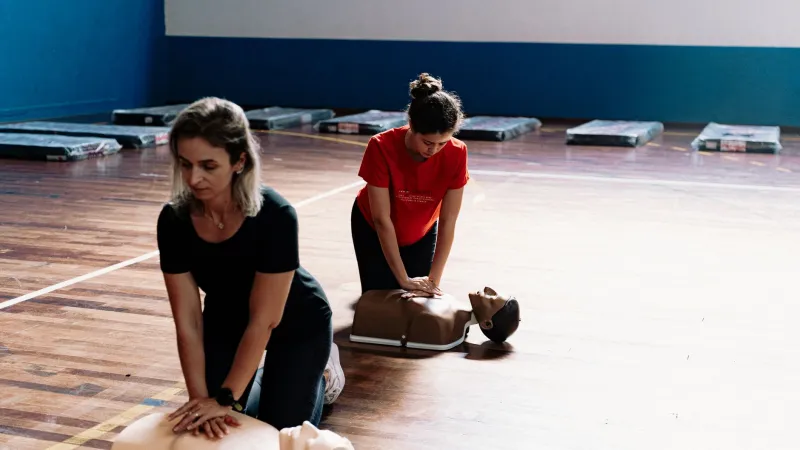
Trained for a Crisis That Never Arrives: How Complacency Is Quietly Eroding Emergency Readiness in American Healthcare

Healthcare workers spend hours earning certifications for emergencies they may never personally encounter during an entire certification cycle — and that statistical rarity is becoming one of the most dangerous forces in modern clinical preparedness. When skills go untested for months or years, the gap between holding a valid CPR card and executing flawless chest compressions under pressure widens in ways that no renewal date can measure. This article examines the psychological and operational p

Why Your Staff Passes the CPR Exam and Forgets the Skills by Summer: The Retention Crisis Facilities Are Finally Confronting

Why Your Staff Passes the CPR Exam and Forgets the Skills by Summer: The Retention Crisis Facilities Are Finally Confronting

Passing a CPR certification exam is not the same as retaining the skills to use it under pressure six months later. New research into memory consolidation and motor skill decay reveals a troubling pattern affecting healthcare facilities nationwide—and a growing number of organizations are quietly overhauling how they approach training between renewal cycles.

How Quickly CPR Competency Fades — And the Training Schedules That Actually Prevent It

How Quickly CPR Competency Fades — And the Training Schedules That Actually Prevent It

Research consistently shows that CPR skill retention deteriorates far sooner than the standard two-year certification window suggests. This article examines the neuroscience behind that decline and presents practical, evidence-informed micro-training models that healthcare facilities can adopt to sustain genuine readiness without overburdening their staff.

One Card, Fifty Rules: Navigating CPR and Healthcare Credential Reciprocity Across State Lines

One Card, Fifty Rules: Navigating CPR and Healthcare Credential Reciprocity Across State Lines

A valid BLS certification earned in one state may not satisfy licensing requirements in another, leaving mobile healthcare professionals in a costly and confusing compliance gap. The United States lacks a unified standard for credential reciprocity, and the consequences for traveling clinicians, locum tenens workers, and relocating nurses can be significant. This article examines how the patchwork of state regulations works, which states present the greatest friction, and what steps professional

The Two-Year Illusion: What Your CPR Certification Card Doesn't Tell You About Skill Decay

The Two-Year Illusion: What Your CPR Certification Card Doesn't Tell You About Skill Decay

A valid CPR certification card does not guarantee equally valid CPR performance on the day it expires versus the day it was issued. Research on motor skill degradation and stress-response physiology reveals a sobering truth: competency erodes well before the renewal deadline arrives, and healthcare professionals who wait until the last moment to recertify may be operating on a dangerously diminished skill set.

Beyond the Renewal Date: How to Keep CPR Skills Sharp Between Certifications

Beyond the Renewal Date: How to Keep CPR Skills Sharp Between Certifications

A CPR certification card confirms that you met a competency standard on a specific date — it does not guarantee that your skills remain intact months later. Research consistently shows that psychomotor performance degrades well before the two-year renewal window closes, leaving a dangerous gap between credentialed status and actual readiness. This article examines the science of skill decay and offers evidence-based strategies for staying genuinely prepared year-round.

Off the Clock, Off Their Game: Why Credentialed Clinicians Hesitate When Emergencies Strike Outside Their Domain

Off the Clock, Off Their Game: Why Credentialed Clinicians Hesitate When Emergencies Strike Outside Their Domain

A cardiologist freezes at a restaurant when a diner collapses. A seasoned ICU nurse hesitates at an airport gate before a fellow traveler loses consciousness. These are not fictional scenarios—they are documented patterns rooted in the psychology of role-specific training and environmental context. Understanding why trained healthcare professionals experience decision paralysis outside their specialty is essential to building certification programs that produce truly universal responders.

Smarter Hospitals, Same Human Hands: Why Certified Responders Remain Irreplaceable in the Age of AI

Smarter Hospitals, Same Human Hands: Why Certified Responders Remain Irreplaceable in the Age of AI

Artificial intelligence is reshaping how hospitals detect deteriorating patients and coordinate emergency alerts, yet no algorithm has replicated the judgment of a certified responder at the bedside. As healthcare facilities invest heavily in automated triage and predictive monitoring, the case for rigorous human training has never been stronger. This article examines why technological sophistication and certified competence must advance together—not as rivals, but as partners.

Certified and Frozen: Closing the Gap Between CPR Knowledge and Emergency Action

Certified and Frozen: Closing the Gap Between CPR Knowledge and Emergency Action

Millions of Americans hold valid CPR certifications, yet freeze when a real cardiac emergency unfolds in front of them. The problem isn't technique — it's the psychological and cognitive barriers that standard certification courses rarely address. Understanding why trained individuals hesitate is the first step toward building training programs that actually work under pressure.

When the Dispatcher Speaks, Are You Ready to Listen? The Hidden Gap in America's CPR Preparedness

When the Dispatcher Speaks, Are You Ready to Listen? The Hidden Gap in America's CPR Preparedness

Across the United States, 911 dispatchers are trained to walk callers through CPR—but most Americans have never practiced receiving that guidance under pressure. This article examines the critical disconnect between dispatcher protocols and public readiness, and why structured training in phone-guided CPR is one of the most overlooked components in emergency preparedness today.

Reel vs. Real: How Hollywood's CPR Myths Are Putting Lives at Risk

Reel vs. Real: How Hollywood's CPR Myths Are Putting Lives at Risk

Television dramas and blockbuster films have long romanticized CPR, depicting miraculous revivals after a few gentle chest compressions and a dramatic breath. These portrayals are not merely inaccurate — they actively shape public perception in ways that can discourage real bystanders from acting during cardiac emergencies. Understanding what effective CPR actually looks like is the first step toward saving a life.

Mapping Your Certification Journey: How BLS, ACLS, and PALS Shape a Healthcare Career

Mapping Your Certification Journey: How BLS, ACLS, and PALS Shape a Healthcare Career

Choosing between Basic Life Support, Advanced Cardiac Life Support, and Pediatric Advanced Life Support certifications is one of the most consequential decisions a healthcare professional will make early in their career. Each credential opens distinct clinical doors, influences salary trajectories, and signals specialized competence to employers. This guide breaks down the differences, the sequencing logic, and the career implications so you can build a certification pathway with purpose.

The Case for CPR Certification Before 30: Why Young Adults Cannot Afford to Wait

The Case for CPR Certification Before 30: Why Young Adults Cannot Afford to Wait

Sudden cardiac arrest does not discriminate by age, and the statistics surrounding cardiac emergencies in Americans under 40 are more alarming than most people realize. This article makes a data-driven argument for why CPR certification should be treated as a fundamental life skill — as essential as a driver's license — for every young adult in the United States. From bystander survival rates to the psychological confidence that comes with preparedness, early certification is an investment that